Four perspectives on quantum software.

Meet the invited lecturers joining RiSS from 2–4 December 2026. Additional profiles and lecture details will be published as they are confirmed.

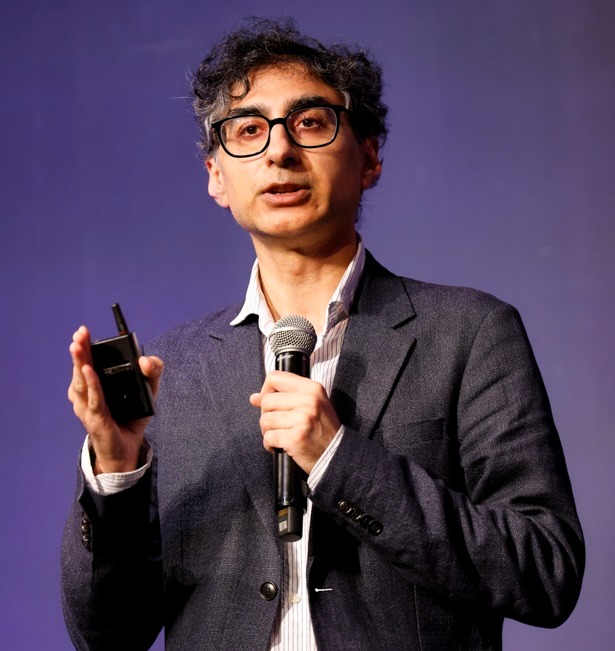
Shaukat Ali speaking at an event
Lecturer 01

Shaukat Ali

Chief Research Scientist, Research Professor, and Head of Department · Simula Research Laboratory

Shaukat Ali is a Chief Research Scientist, Research Professor, and Head of Department at Simula Research Laboratory in Oslo, Norway. He also serves as director of the Norwegian Quantum Software Center. His research focuses on developing advanced methods for engineering cyber-physical systems using artificial intelligence, digital twins, and quantum computing.

He has led numerous national and European research projects in software testing, search-based software engineering, model-based systems engineering, and quantum software engineering. He is a co-founder of several key initiatives in the emerging field of quantum software, including the International Workshop on Quantum Software Engineering (held at ICSE), the International Conference on Quantum Software, and the QC+AI Workshop (held at AAAI). He also represents Simula in multiple national and international quantum computing research and industry networks.

Lecture

Foundations of Quantum Software Engineering

Abstract

Quantum Software Engineering (QSE) is an emerging field within software engineering focused on cost-effective software development for quantum computers. Although still in its early stages, research in QSE is growing, particularly in the design, development, testing, and maintenance of quantum software. As interest continues to rise, QSE is attracting both new and experienced researchers and practitioners. This talk will provide an introduction to quantum computing, followed by an overview of QSE, including requirements, modeling, coding, testing, and debugging, and will highlight current challenges and future research directions.
Elisabetta Di Nitto
Lecturer 02

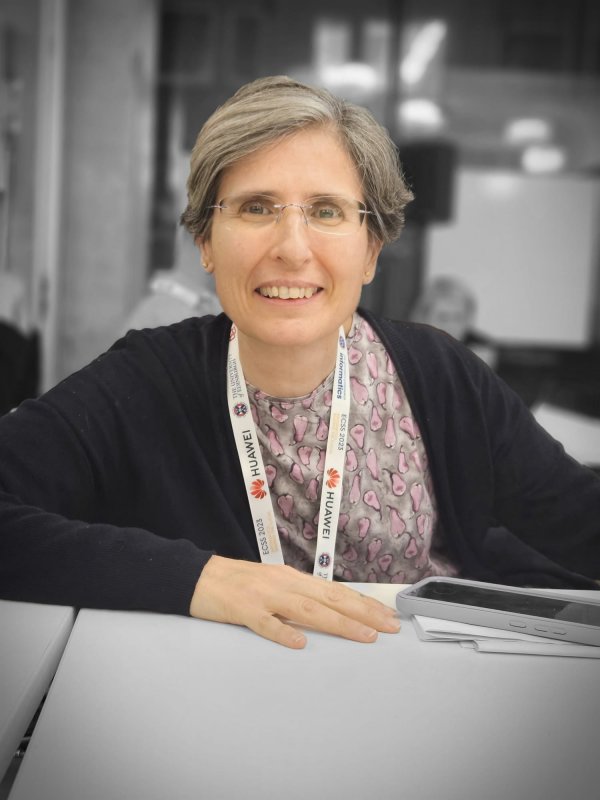
Elisabetta Di Nitto

Full Professor · Politecnico di Milano

Elisabetta Di Nitto is Full Professor in the Dipartimento di Elettronica, Informazione e Bioingegneria of Politecnico di Milano.

Elisabetta’s expertise lies in the area of software engineering and, in particular, of large-scale, open, service-oriented systems with a special attention to the techniques to make these systems self-adaptable to the changes in the environment and in the performances of its distributed components, and to enable them to identify and incorporate new components at runtime. Recently, she has been focusing on supporting the development, deployment and operation of data-intensive applications and on Cloud Computing and, in particular, on how to design applications that can run on multiple clouds in order to limit vendor lock-in and to increase availability and reliability of such applications. In the last years she has started focusing on quantum software engineering, in particular, on modelling and evaluating quantum software.

Elisabetta has published more than 170 papers in journals and in the proceedings of the most important conferences in the area of software engineering. She has been part of the technical program committee and/or organizing committee of the most important conferences in the field of software engineering.

Lecture

Quantum Software Engineering: Requirements and Design

Abstract

Quantum computing is making significant strides and stands at the forefront of innovations that could revolutionize how we address specific problems. In this seminar, we will highlight the fundamental differences between classical and quantum computation, the main challenges of quantum technologies, and an overview of promising application domains. We will then present the main characteristics of the two major quantum programming paradigms, gate-based computation and quantum annealing and provide an overview of the research trends in quantum software engineering research. In the final part of the seminar we will focus on quantum and hybrid annealing as the most mature quantum-based programming approaches and we will present some design experiments in this specific context.

Rui Maranhão
Lecturer 03

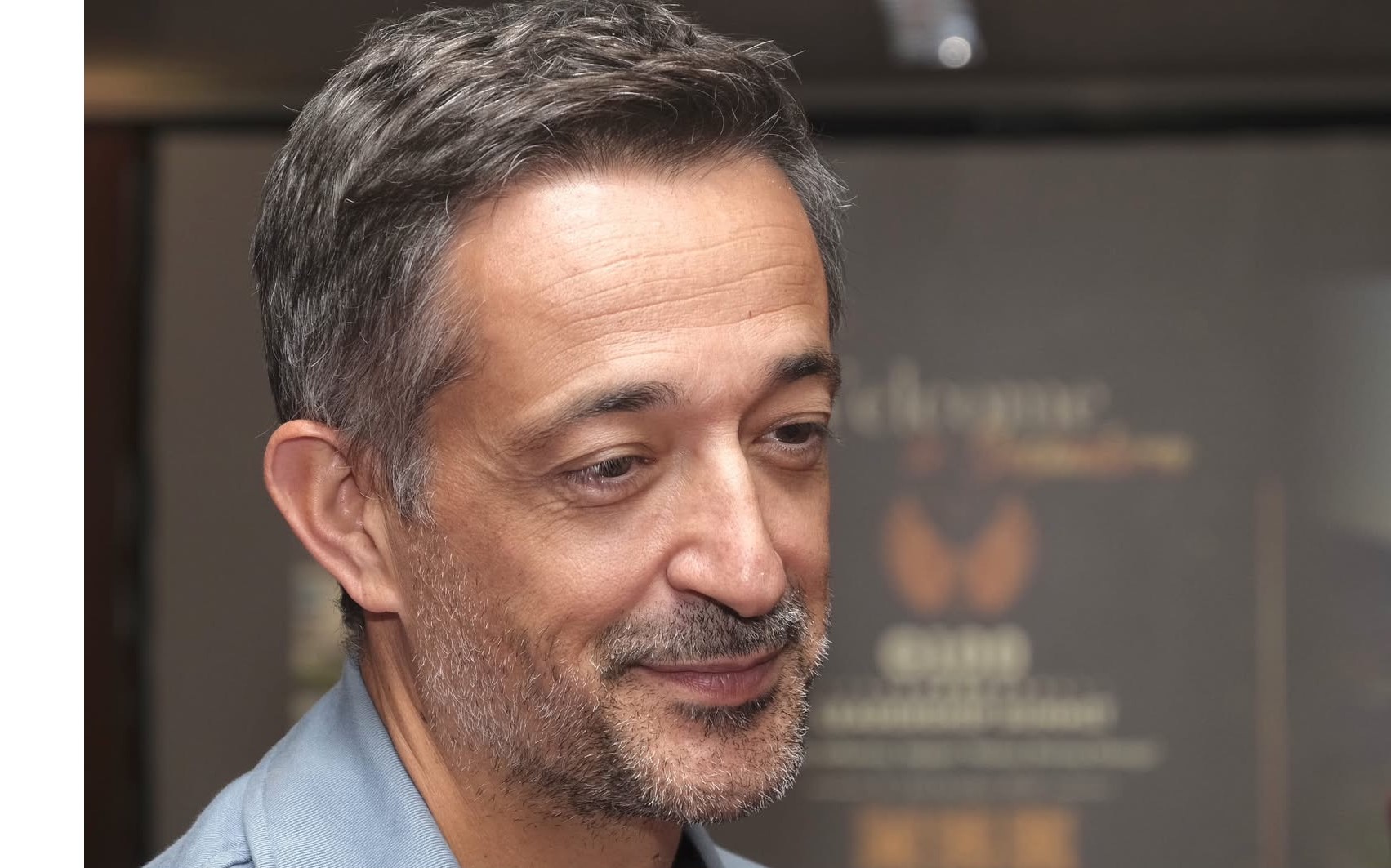
Rui Maranhão

Full Professor · University of Porto

Prof. Rui Maranhão (publishes as Rui Abreu) is a Full Professor of Software Engineering at the Faculty of Engineering of the University of Porto (FEUP) and a Senior Staff Researcher at Meta. He holds a Ph.D. in Computer Science — Software Engineering from Delft University of Technology, the Netherlands, and an M.Sc. in Computer and Systems Engineering from the University of Minho, Portugal.

His current research focuses on quantum software engineering, in particular on how to test quantum programs when classical assumptions no longer hold: executions are probabilistic, measurement disturbs the state under test, and oracles are often unavailable. His work includes metamorphic testing for oracle problems, mutation testing for Qiskit programs with the QMutPy tool, and coverage criteria for quantum circuits — from gate-branch coverage to probabilistic condition, decision and path coverage in QaCoCo — as well as verification and validation of quantum software on real, noisy hardware.

Previously, he was an Associate Professor at Instituto Superior Técnico, University of Lisbon, a member of the Model-Based Reasoning group at PARC, and a Visiting Researcher at Google NYC, working on tools to increase the security of C/C++ codebases. He is the recipient of 8 Best Paper Awards, including a Distinguished Paper Award at ESEC/FSE 2019 and ICSE SEIP 2025, and co-founded DashDash (now Rows) in 2017.

Lecture

Quantum Software Testing: Oracles, Mutants, and Coverage in a Probabilistic World

Abstract

Classical software testing rests on three quiet assumptions: we can observe a program while it runs, repeat an execution and get the same result, and know the correct output when we see it. Quantum programs break all three. Measurement disturbs the state under test, executions return samples from a distribution rather than a single answer, and for many algorithms no cheap oracle exists. This lecture rebuilds the classical testing toolbox for that reality, following a single research line from problem to tools. We start with the oracle problem and metamorphic testing, where relations between executions replace expected outputs. We then turn to adequacy: mutation testing for Qiskit programs and the QMutPy tool, which seed gate-level faults to measure whether a test suite can actually detect them. Next comes coverage — from gate-branch coverage to probabilistic condition, decision, and path criteria implemented in QaCoCo — and a sobering empirical lesson: high structural coverage does not guarantee fault detection. We close with verification and validation of quantum software and the shift from simulators to real, noisy hardware, where flakiness, drift, and execution cost become test-design concerns. Participants will leave with a practical framework, hands-on tool experience, and a clear map of the open problems.

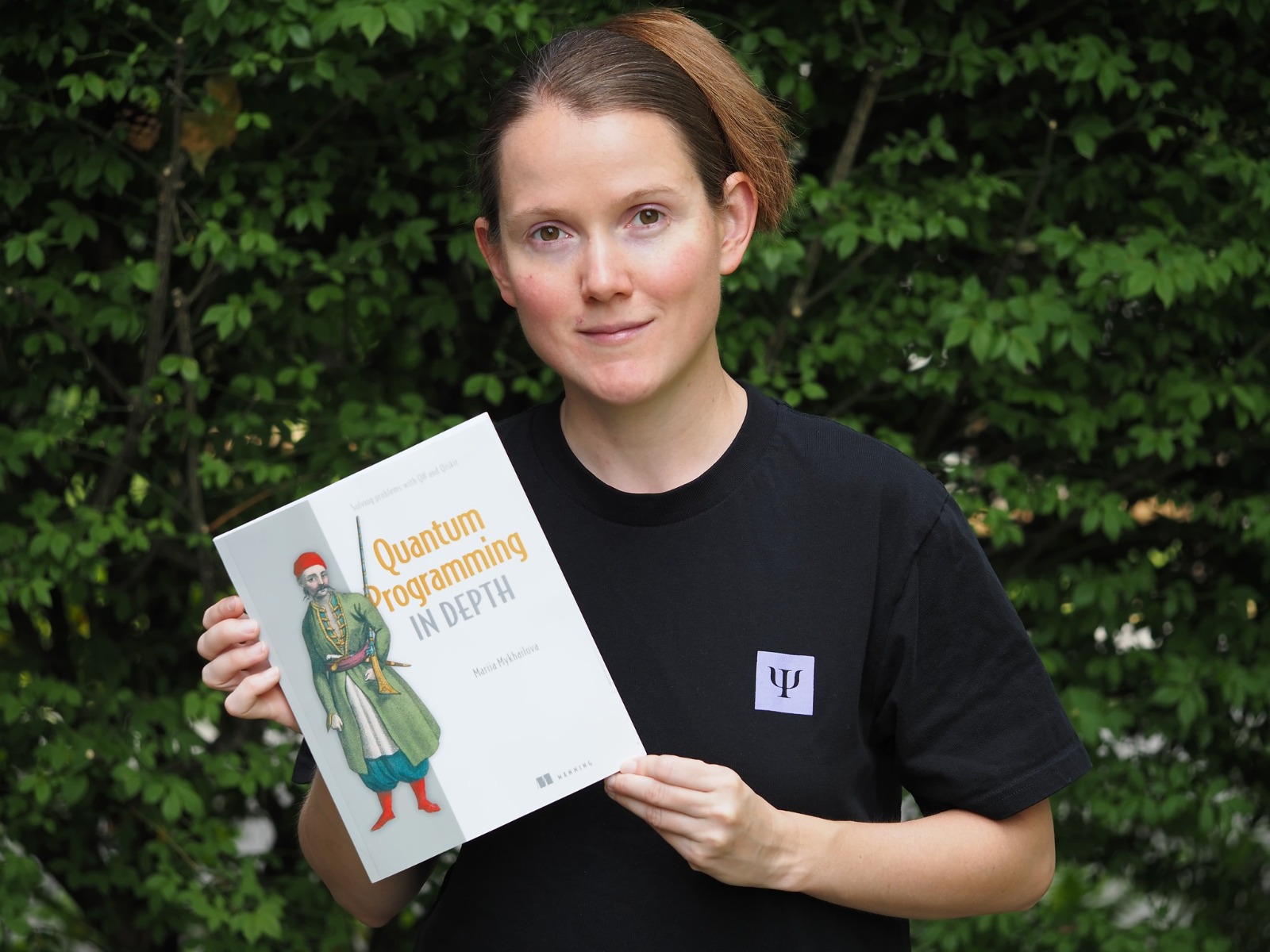
Mariia Mykhailova
Lecturer 04

Mariia Mykhailova

Principal Quantum Applications Software Developer · PsiQuantum

Mariia Mykhailova is a Principal Quantum Applications Software Developer at PsiQuantum. She works on developing software for fault-tolerant quantum computation and educational materials focused on FTQC algorithms. Before PsiQuantum, she spent eight years at Microsoft Quantum, working on quantum software, education, and outreach.

Additionally, Mariia taught a graduate course “Introduction to Quantum Computing” at Northeastern University in 2020-2025 and a graduate course “Introduction to Quantum Algorithms and Software” at the University of Washington in 2026. She is the author of two books, “Q# Pocket Guide” (O’Reilly, 2022) and “Quantum Programming in Depth: Solving problems with Q# and Qiskit” (Manning, 2025). She holds MS in Applied Math from Kyiv Polytechnic Institute, Ukraine.

Tutorial

Programming and Implementation for Quantum Software Engineering

Abstract

As the field of quantum computing transitions from NISQ to fault-tolerant mode, the scale of quantum algorithms of interest grows. Quantum software toolkits designed for FTQC algorithms should support development and validation of those large-scale quantum algorithms, as well as help quantum software developers analyze their performance using quantum resource estimation and identify the parts of the algorithms or their implementations that need to be optimized.

In this tutorial, I will walk you through the workflow of software development for fault-tolerant quantum computers. I will use PsiQuantum Development Kit – an open-access toolkit that supports development, validation, and analysis of fault-tolerant quantum algorithms.

In the first part of the tutorial, I will introduce the steps of the FTQC software development and PsiQDK tools that support them. We will then go through the basic concepts used in PsiQDK programs, and implement and validate the algorithms for simple Hamiltonian simulation. In the second part of the tutorial, I will introduce the main concepts necessary to work with quantum resource estimation and demonstrate PsiQDK tools for performing numeric analysis of resources required to run a quantum program and finding the bottlenecks.

The material will require basic knowledge of quantum computing but no prior knowledge of specific application domains such as quantum chemistry. For hands-on exercises, you can install PsiQDK locally (see installation guide at docs.construct.psiquantum.com for instructions) or use Codespaces during the tutorial. We will use the tutorials from Workbench Quantum Katas.